
Be honest for a second. When you hear “zero waste living in India,” what’s the first thought?
“Sounds nice.”
“Looks good on Instagram.”
“Who has the time?”
Exactly.
Zero waste often feels like a lifestyle meant for people who wake up at 5 am, grow their own herbs, and have matching glass jars for everything. Meanwhile, you’re just trying to make chai, find your keys, and remember if you switched off the gas.
Reminder.
Zero waste isn’t about becoming that person. It’s about becoming a slightly more aware version of this person.
Same routines. Same habits. Same life. Just fewer things going into the bin for no good reason.
Why Zero Waste Feels Overwhelming (And How to Start Small)
Let’s talk honestly. Why does zero waste feel heavy?
Because it sounds like: New containers. New rules. New habits. New guilt.
And your brain goes, “Let’s start… next month.”
But what if zero-waste swaps for beginners weren’t about changing everything, but about changing one thing at a time?
You already use:
- Plates
- Tissues
- Garbage bags
- Water bottles
You don’t need to add new habits. You just need better versions of the same habits.
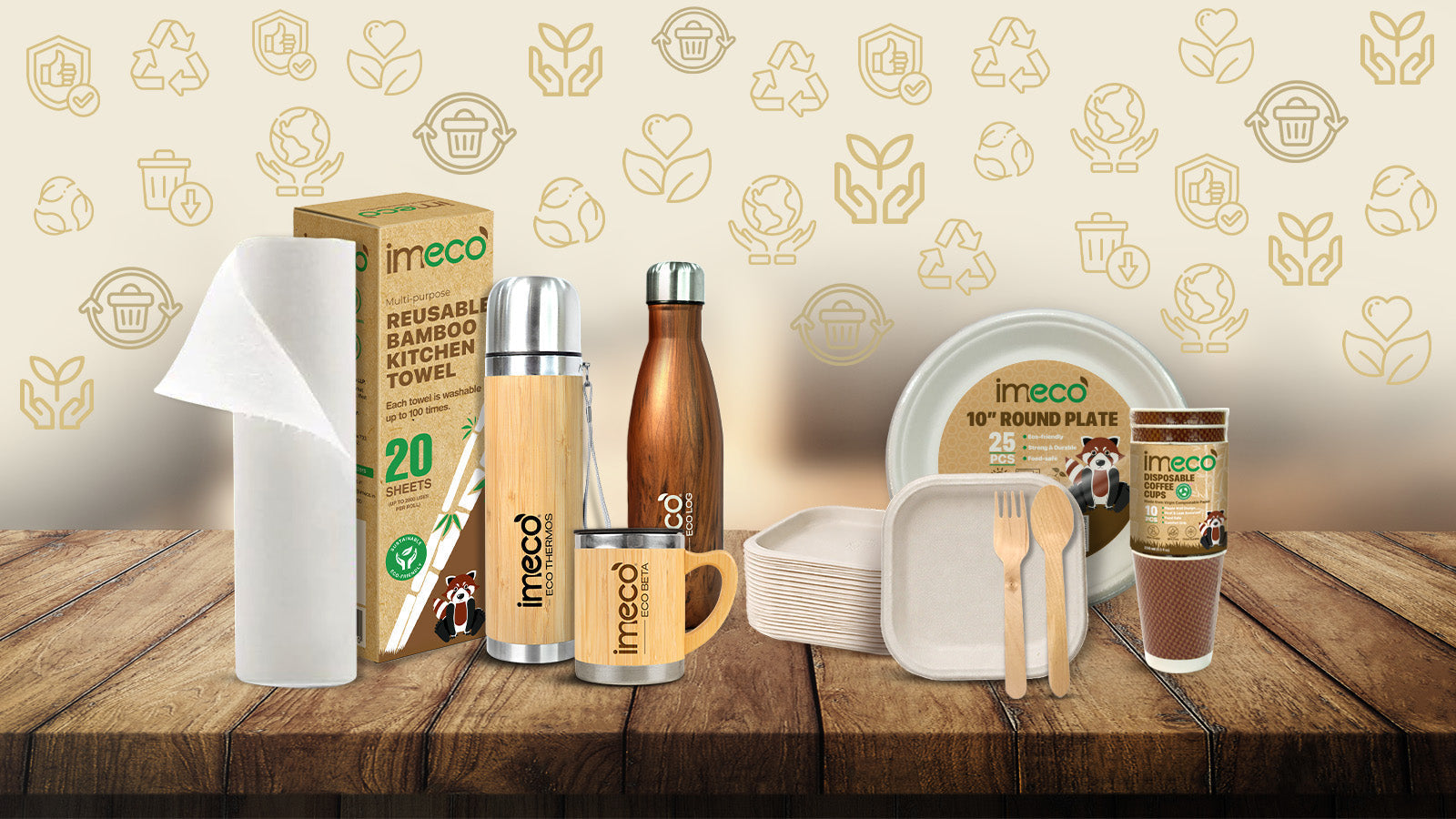
That’s where compostable kitchen products and reusable daily essentials from IMECO come in. Not as a movement. As upgrades.
Finish what you have. Replace it with something better. That’s it. That’s the system.
How IMECO Fits Naturally into a Zero Waste Routine
Let’s walk through your day.
You wake up. You drink water.
Why should that bottle be plastic when stainless steel and copper bottles exist? IMECO’s drinkware quietly replaces single-use plastic without asking you to “try harder.” You’re drinking anyway. Now you’re just doing it for something that lasts.

You eat.
Why should your plate be plastic or heavily coated paper when compostable kitchen products can handle hot, oily Indian food and still go back to the earth after use? IMECO’s plates are strong, food-safe, grease-resistant, and actually look good on the table too.
You clean. You wipe. You throw waste.
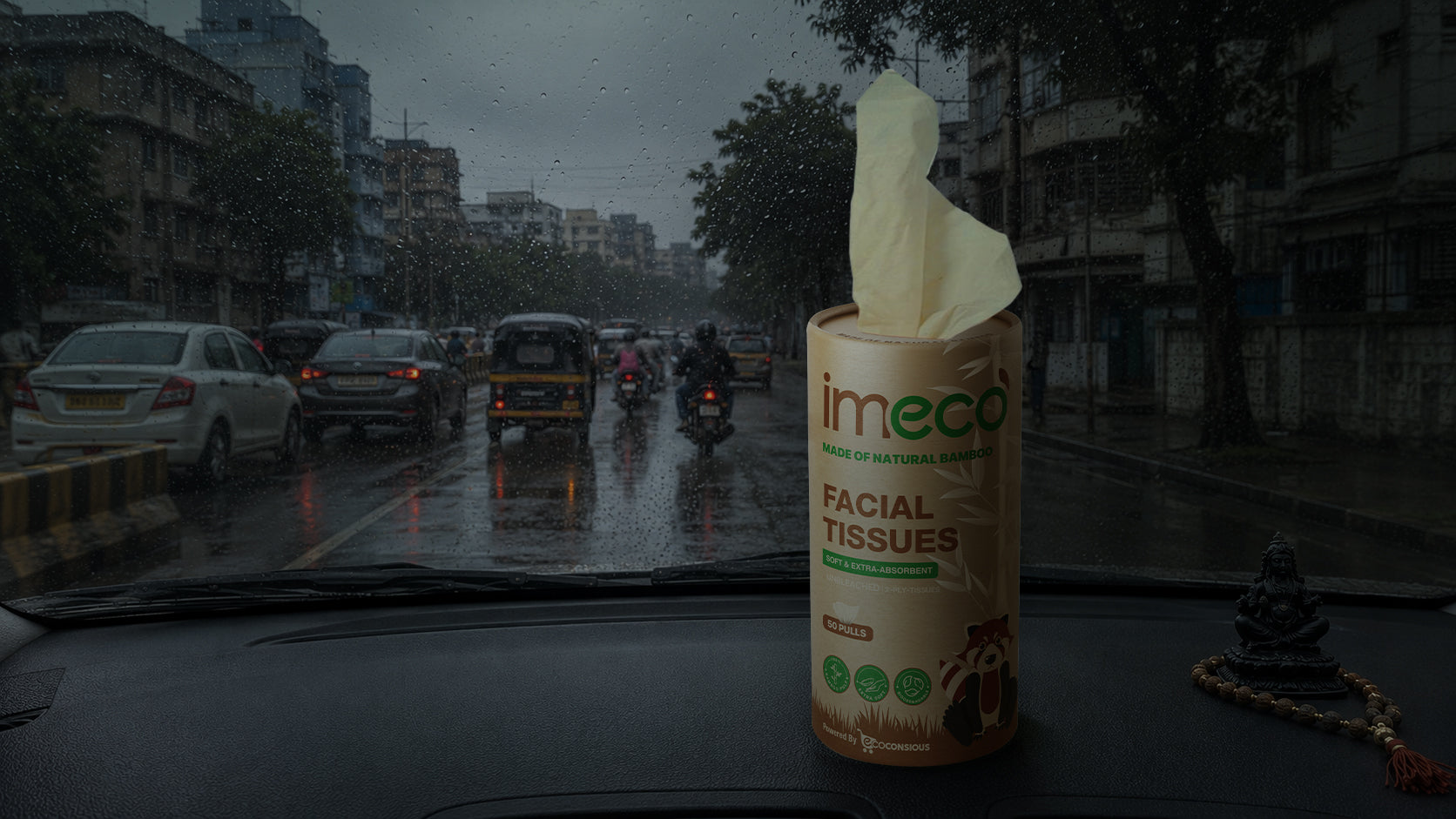
Why should tissues and garbage bags be plastic-heavy when eco-friendly home essentials and biodegradable options exist that do the same job without staying in landfills for centuries?
This is where plastic-free alternatives stop feeling like a sacrifice and start feeling like common sense.
You’re not changing your lifestyle. You’re just choosing environmentally friendly household items when something runs out.
Same routine.
Cleaner materials.
Less waste.
That’s how sustainable lifestyle products fit into real life, not just Pinterest boards.
Finish what you have. Replace it with something better. That’s it. That’s the system.
Plastic-Free Alternatives for Daily Use
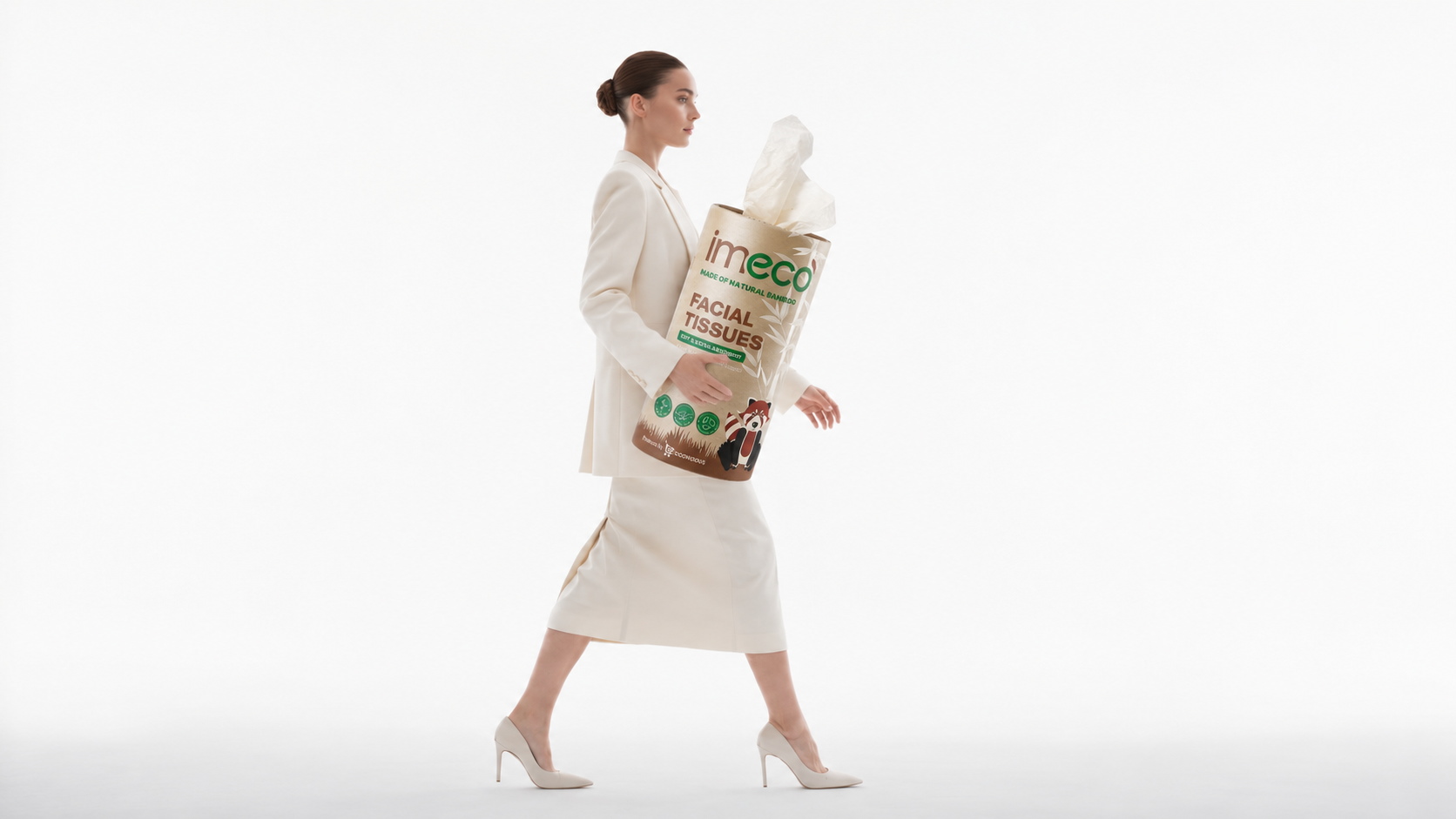
Biodegradable garbage bags that are strong and leak-resistant. Bamboo and paper-based tissues that are soft and chemical-free. Small upgrades that quietly reduce waste without changing your habits.
These are the kind of environmentally friendly household items that don’t demand lifestyle changes. They simply replace what you already use with something cleaner and more responsible.
That’s how sustainable living tips in India become practical instead of overwhelming.


Share:
Your Mood Swings Could Be Linked to Plastic Plates. Here’s What IMECO Decodes
How to Brush Hair Properly: Benefits, Frequency, and More