
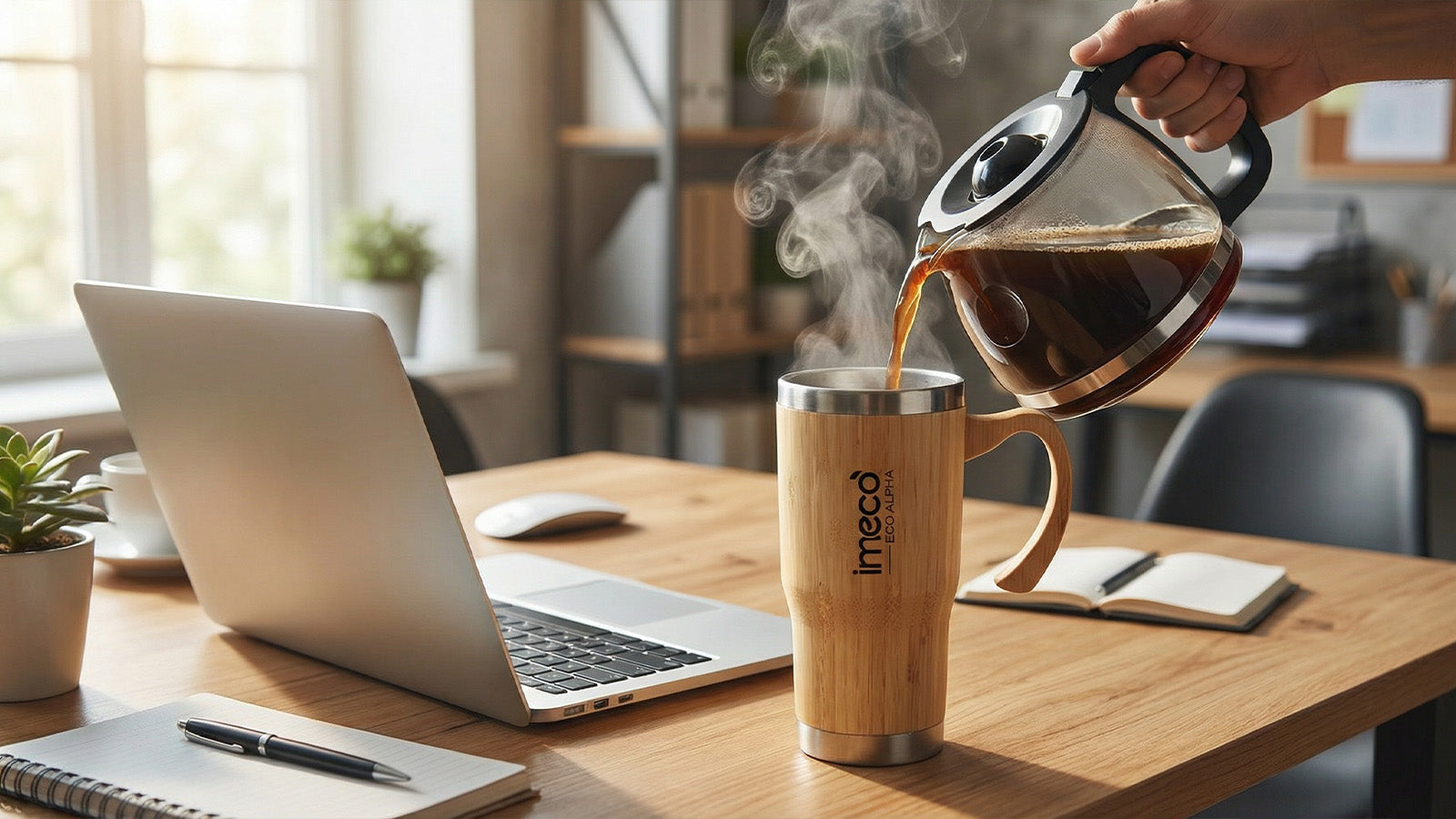
Let’s be honest: there’s nothing more heartbreaking than buying a premium Araku or Blue Tokai roast, only for it to taste like “office tap water” by the time you reach your desk.
You blame the beans. You blame the barista. But have you looked at your mug?
When choosing between a ceramic vs stainless steel travel mug, most of us pick based on the "vibe." But if you actually care about the science of your brew, there’s a clear winner.
Here is why your choice of drinkware is either making or breaking your morning.
1. The Molecular Battle: Stainless Steel vs Ceramic Coffee Taste
The debate isn't just about aesthetics; it’s about chemistry. Ceramic is micro-porous. Think of it like a sponge with millions of tiny, invisible holes.
Over time, those holes trap old coffee oils. These oils turn rancid, quietly tainting your fresh, expensive brew with a stale aftertaste. It's why that “clean” ceramic mug sometimes smells slightly... off.
High-grade stainless steel, like the interior of our IMECO Coffee Mugs range, is non-porous. It’s like a fortress. It doesn't absorb anything, and it doesn't give anything back.
If you want your medium-roast to actually taste like notes of chocolate and berry, steel is the way to go.
2. Thermal Footprint: Why Vacuum Insulated Coffee Mug Benefits Outlast Ceramic
In the Indian heat (or under a blasting office AC), “hot” coffee becomes “lukewarm disappointment” in under 12 minutes in a regular ceramic mug.
The vacuum-insulated coffee mug's benefits come down to physics. By creating a “void” between two walls of steel, heat has nowhere to go. It’s trapped.
This keeps your drink at the “sweet spot” temperature, usually between 60°C and 70°C, for hours. But why does this matter?
Because as coffee cools too fast, its acidity profile shifts, often becoming unpleasantly sour. A steady temperature means coffee flavour retention science is working in your favour.

3. Flavour Retention Science: Why Non-Porous Drinkware is Best for Speciality Coffee
If you're spending money on speciality coffee, you're paying for volatile aromatic compounds. These are the delicate scents that make coffee “special.”
Non-porous drinkware ensures these compounds stay in the liquid rather than getting trapped in the walls of your cup. This is where IMECO shines.
Stop wondering: Why does coffee taste metallic in steel mugs? If your coffee tastes like a bunch of keys, you’re likely using low-grade, industrial steel. IMECO uses premium 304-grade steel that is chemically stable, meaning zero metallic leaching and 100% flavor.
4. From Commute to Desk: Choosing a Top-Rated Leak-Proof Coffee Tumbler for 2026
For the 2026 professional, your mug needs to survive a Mumbai local or a Bangalore cab ride. You need top-rated leak-proof coffee tumblers that don't decide to “share” your coffee with your laptop.
-
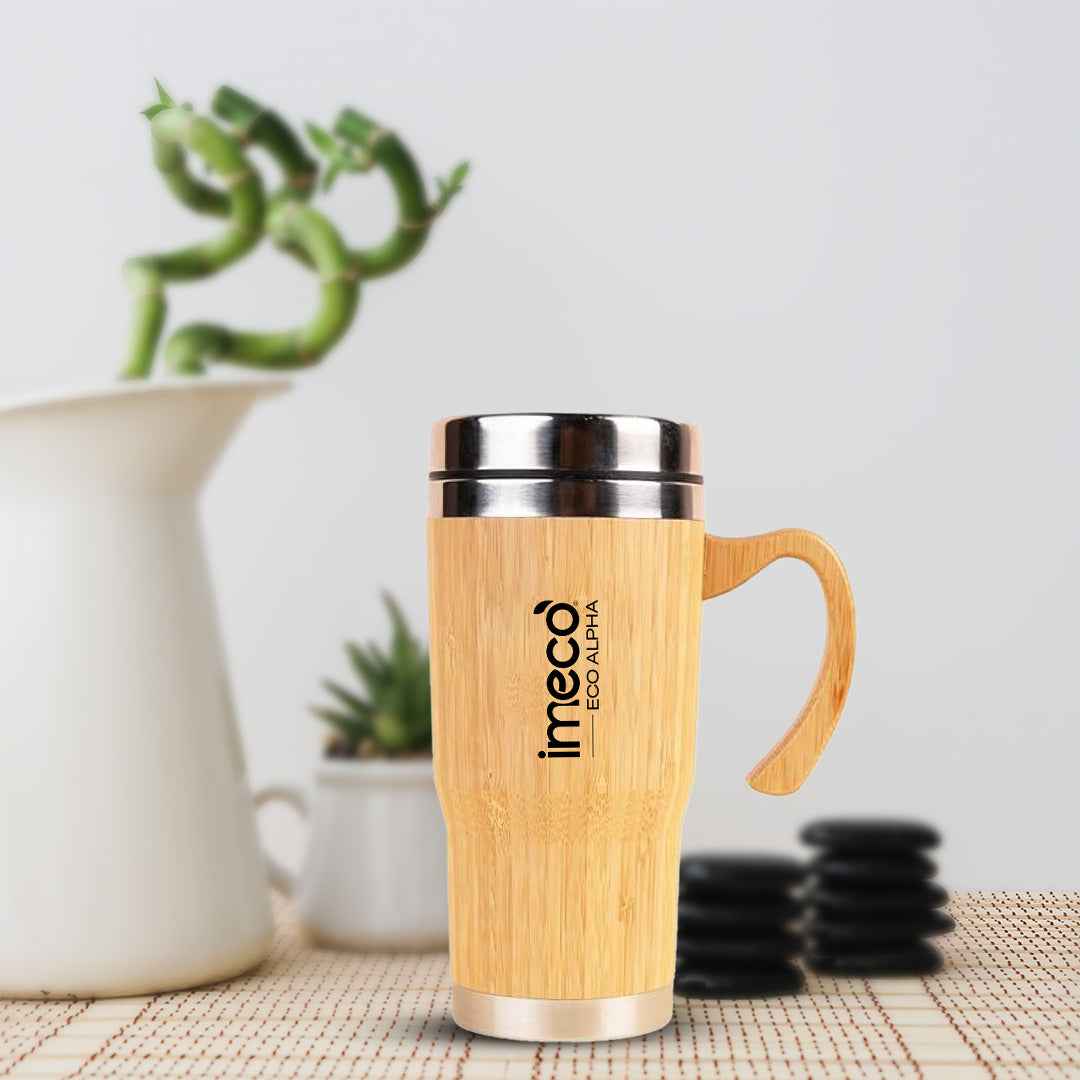
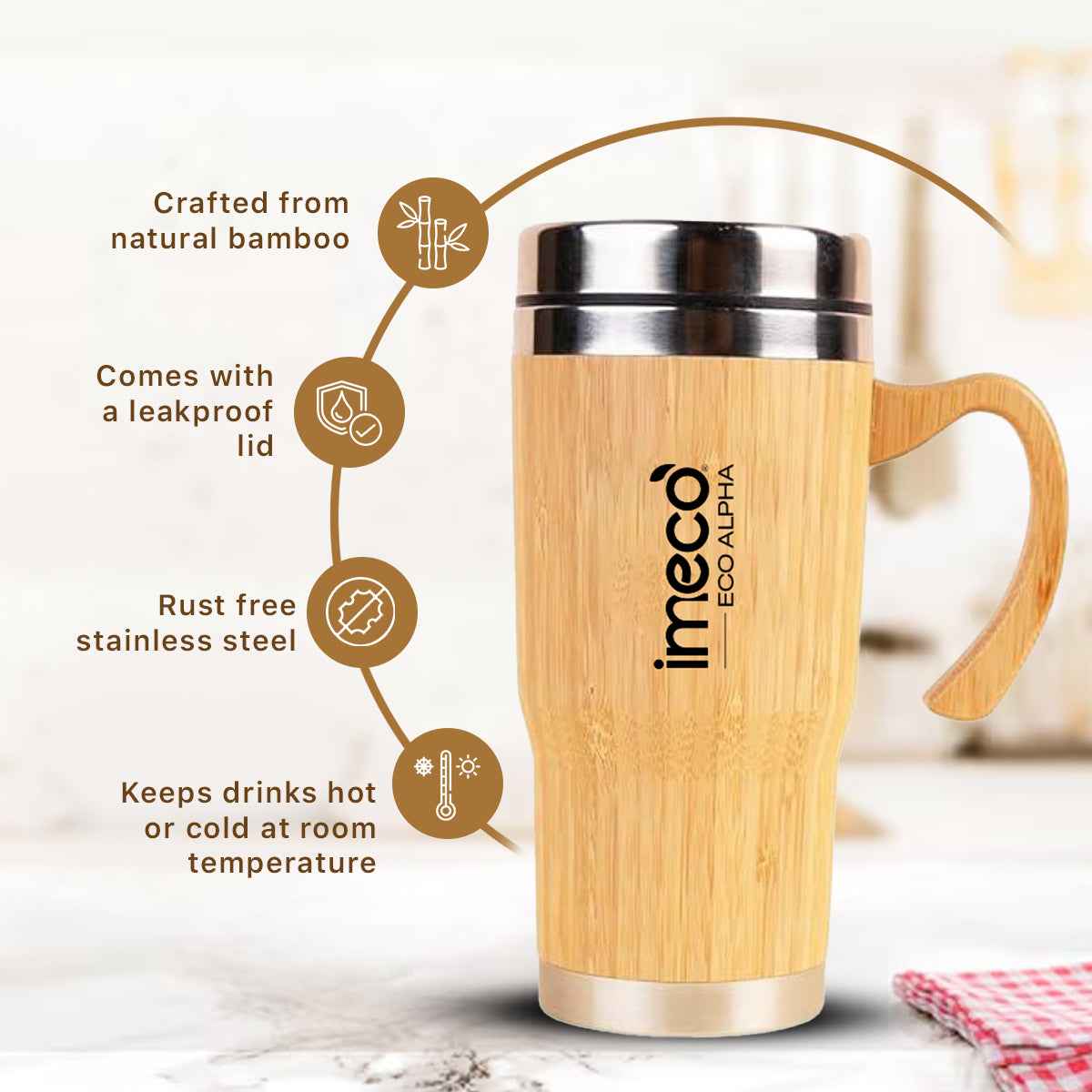
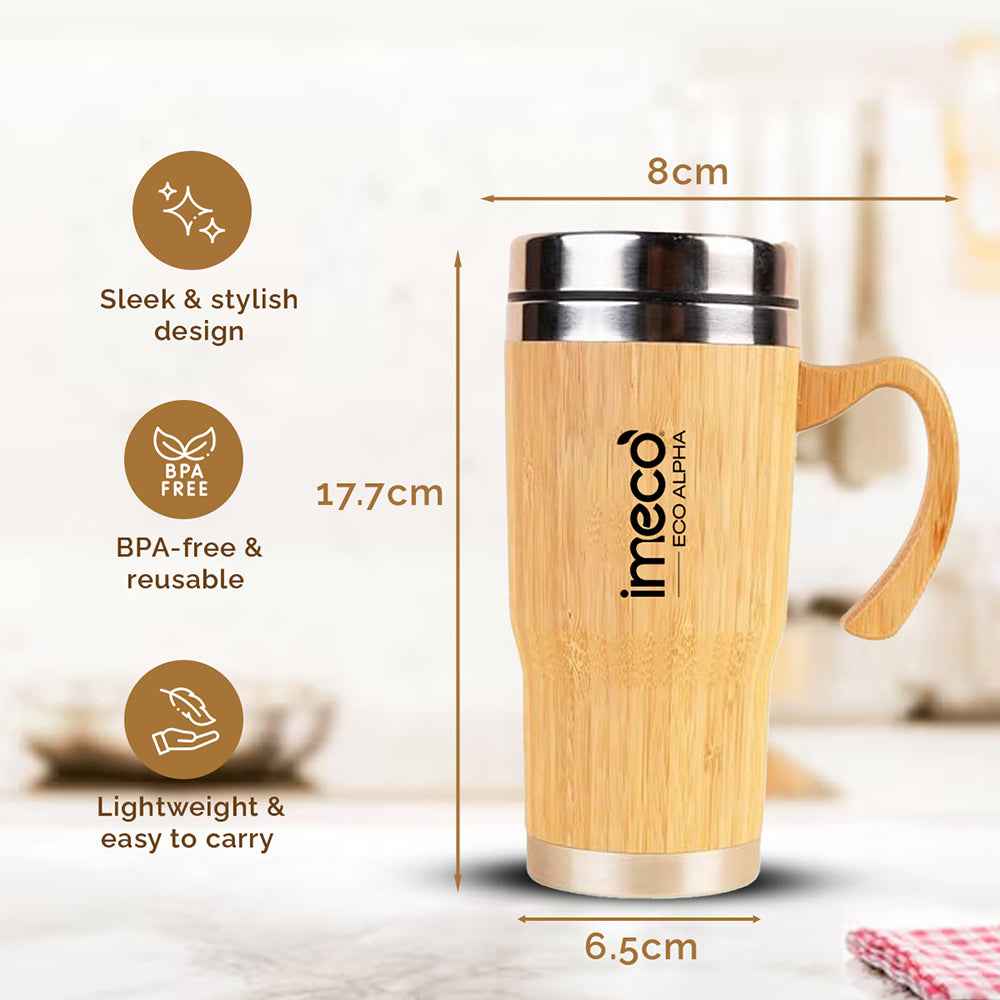
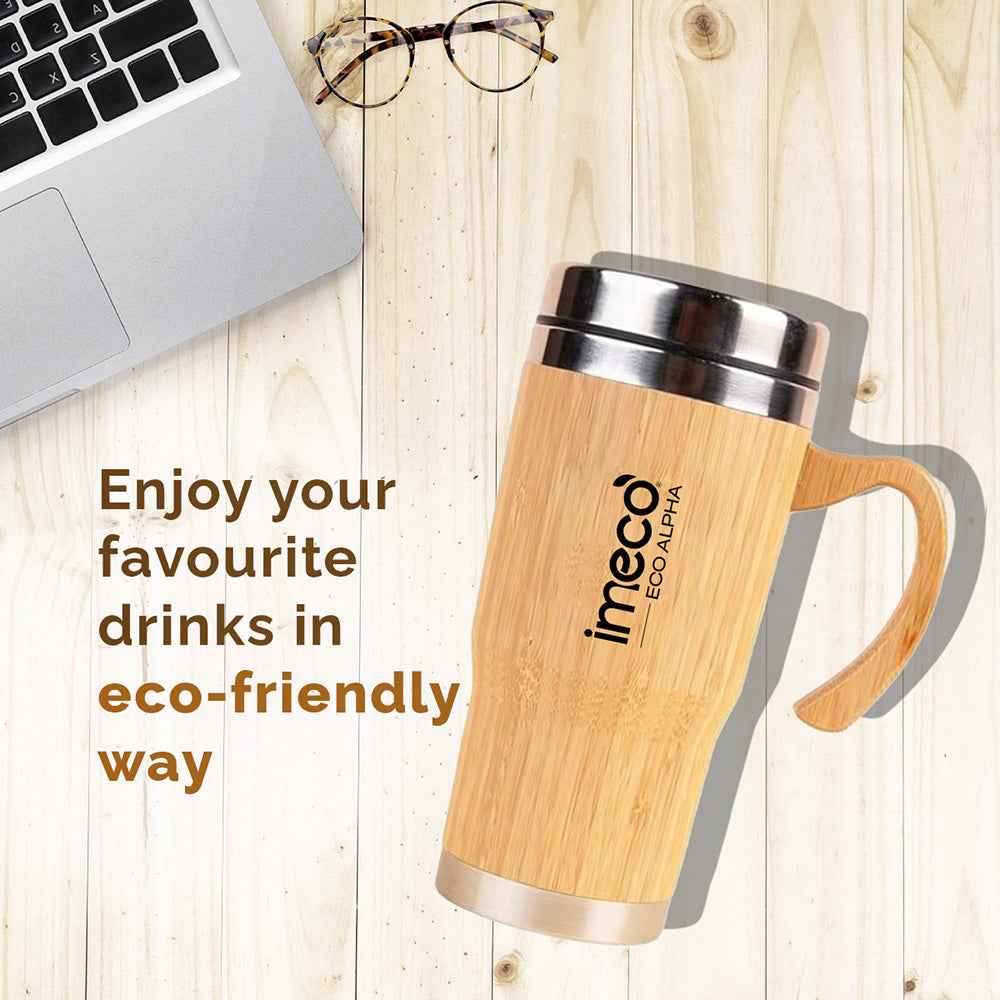
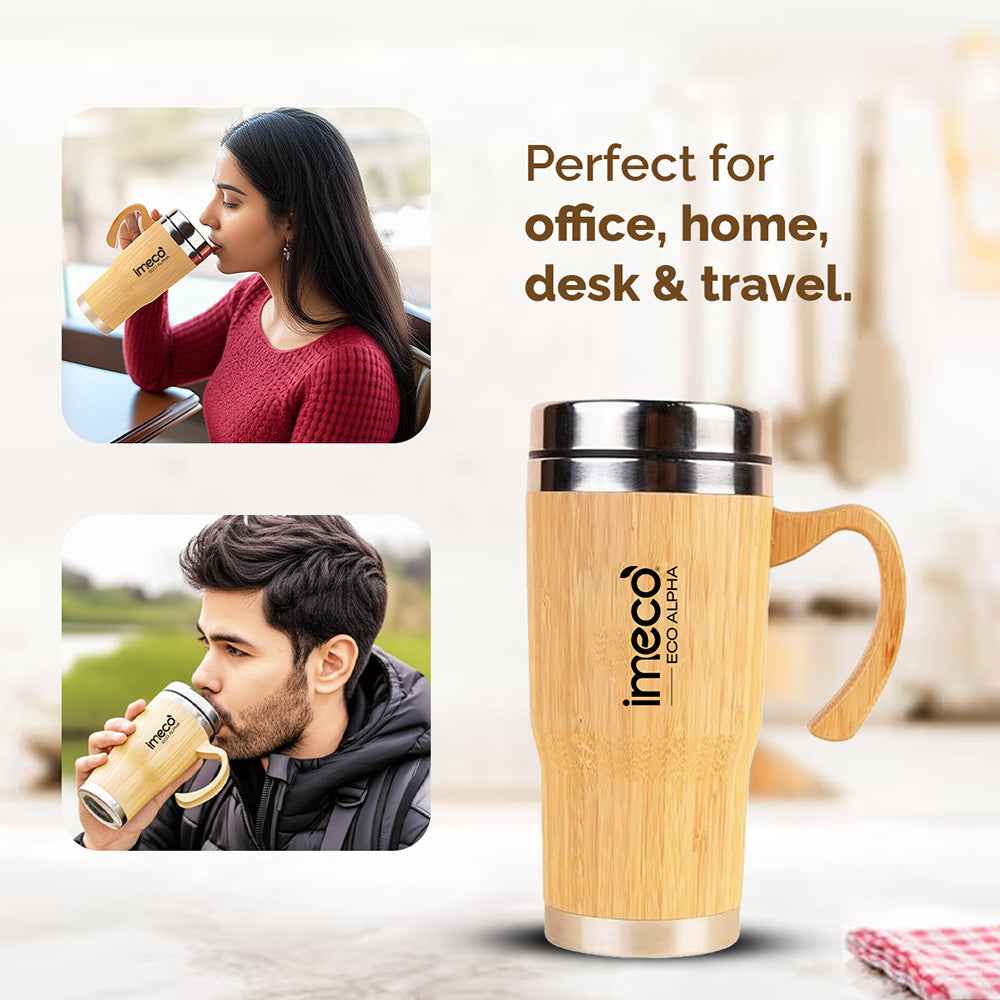
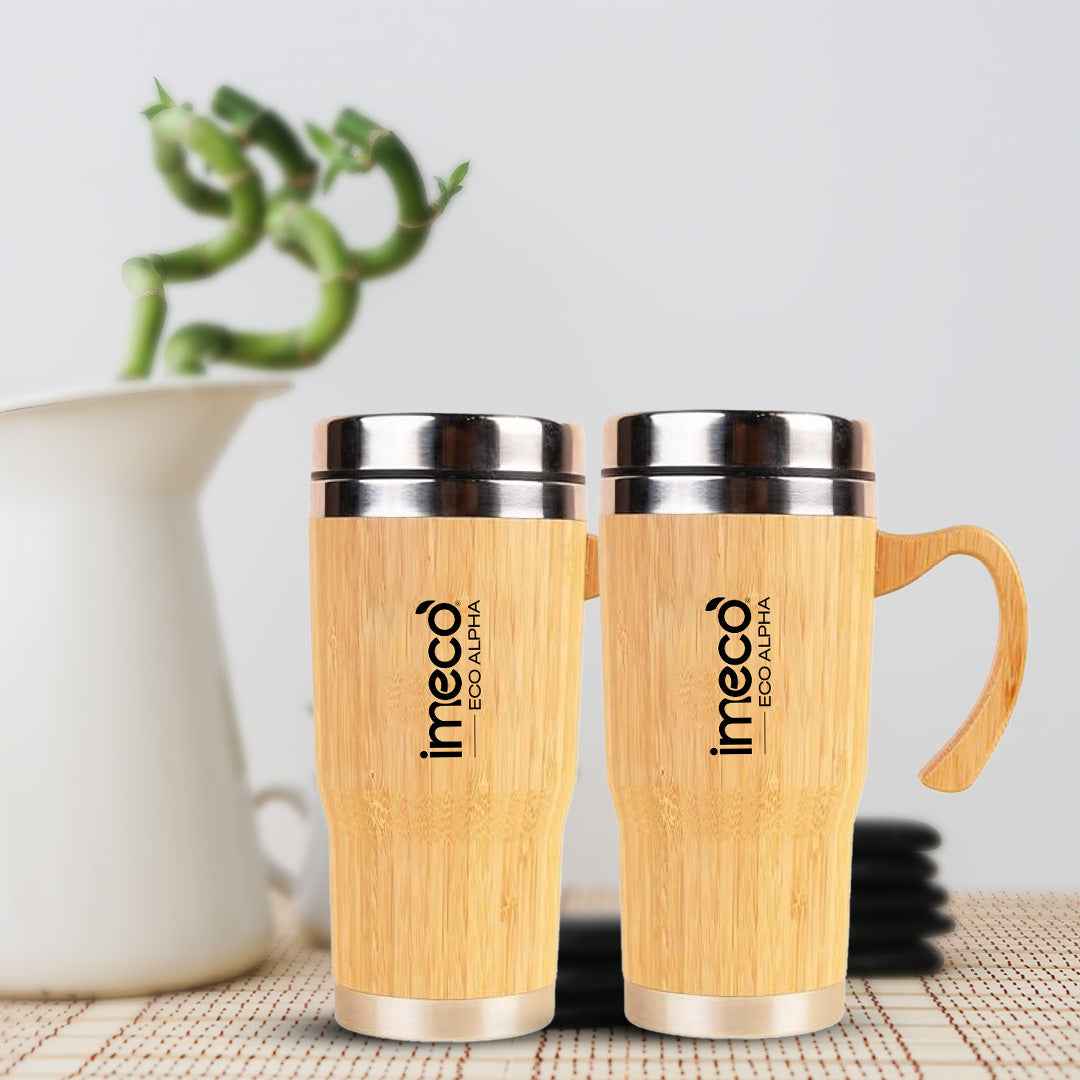
ECO ALPHA (450 ml): This is the heavy-lifter. It’s an insulated bamboo coffee mug with a steel core. It’s lightweight but tough—perfect for long commutes and keeping drinks hot for half the day.
-
ECO BETA (300 ml): The minimalist cousin. It’s a compact bamboo mug designed for quick sips and “desk-to-meeting” transitions where you just need something spill-free and stylish.
Whether you are looking for personal use or sustainable corporate gifting coffee mugs, these designs bridge the gap between “eco-friendly” and “high-performance.”





Share:
The Best Floor Cleaner for All Types of Floors: A Guide to a Safe, Toxin-Free Home
Detangling Without Damage: Why the Bamboo Paddle Brush is the Ultimate Frizz-Fix